six-time web design
award winner since 2001

WE MAKE YOU LOOK GOOD
WEB DESIGN & BRANDING
 949 570 4845




What Are Splash Pages and Landing Pages?
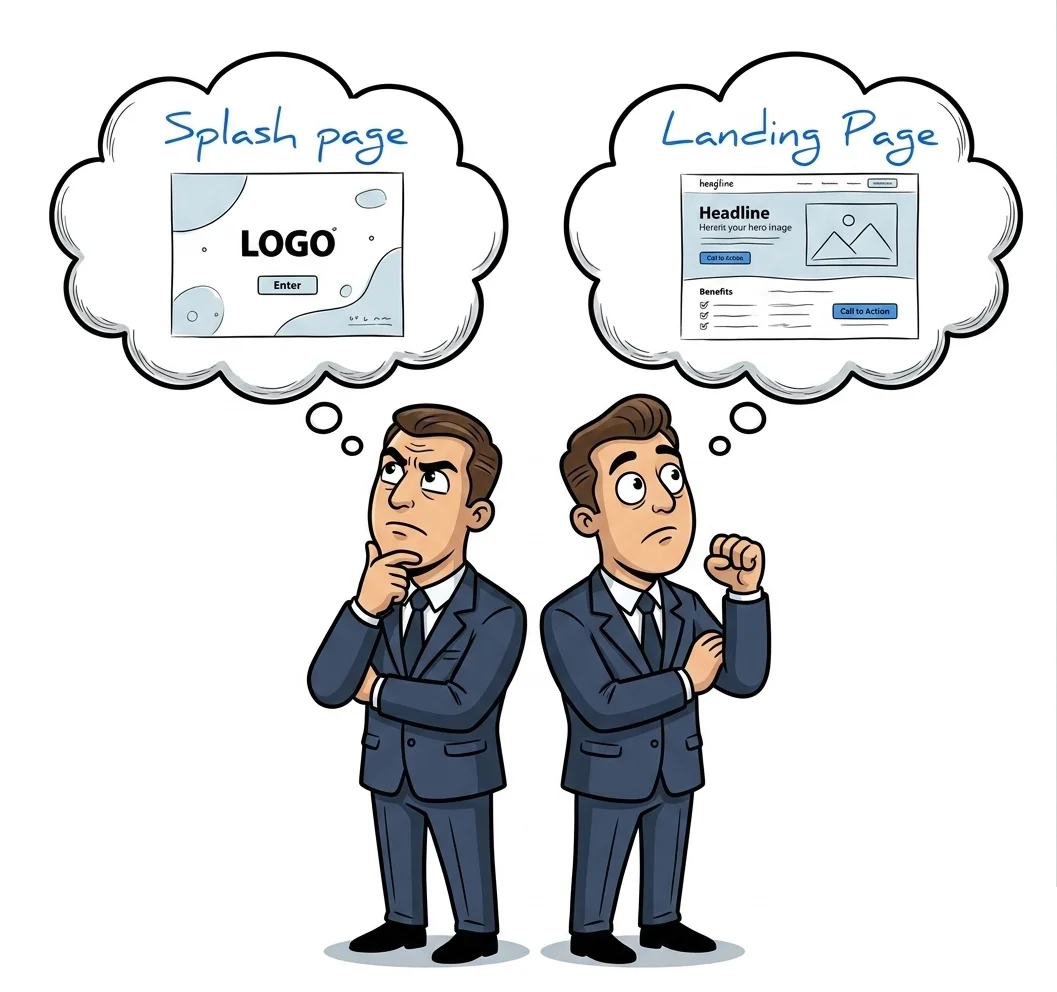
A splash page is an introductory page that appears before a visitor enters your main website. It’s often used to deliver a quick message, such as a brand statement, promotion, language selection, or age verification. Splash pages are usually minimal, visually engaging, and short-lived—designed to direct users to the main site.
A landing page, on the other hand, is a focused, goal-driven page designed to convert visitors into leads or customers. It’s typically tied to a specific campaign, product, or offer, and includes a clear call-to-action (CTA), such as signing up for a newsletter, downloading a resource, or making a purchase.
Key Differences
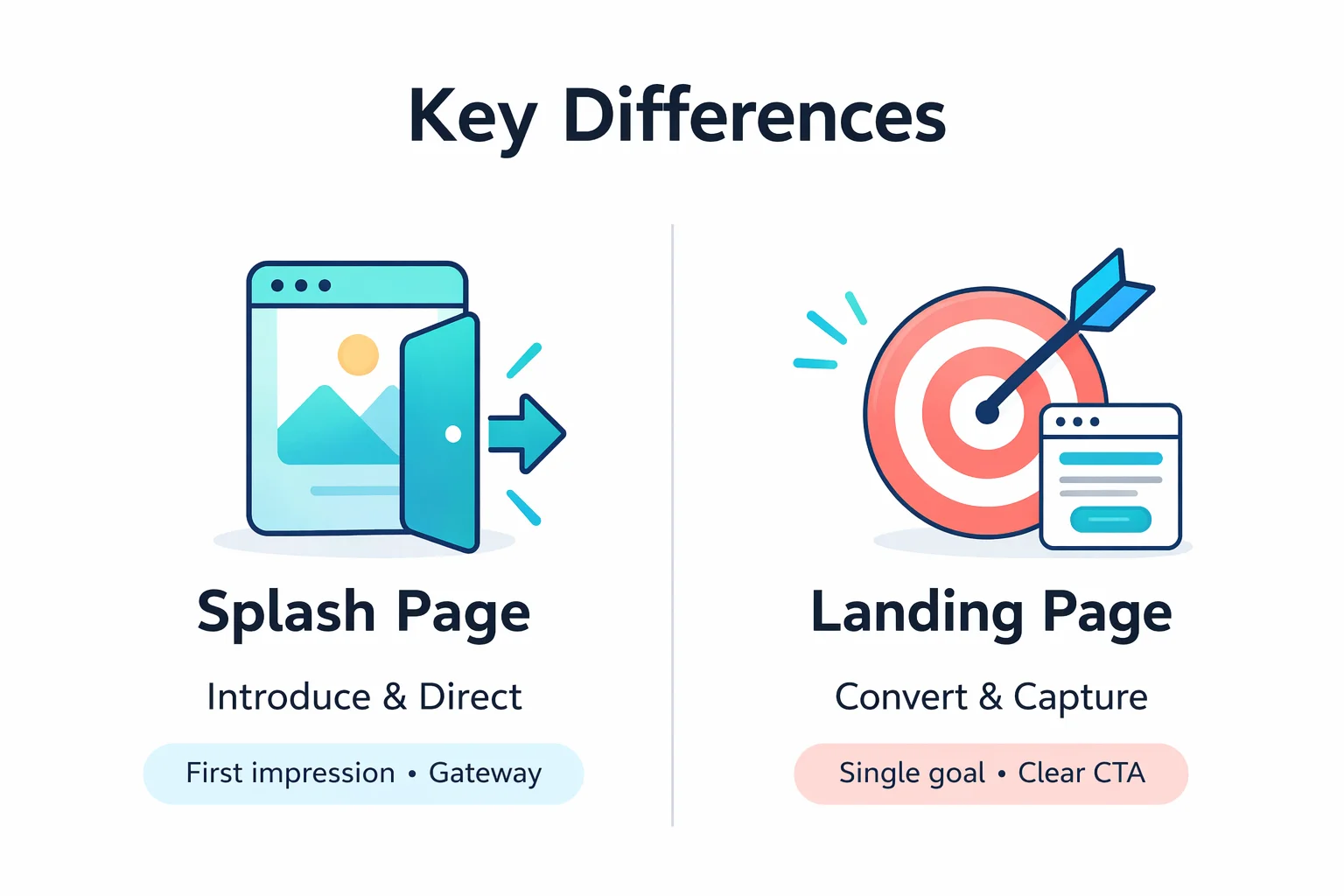
The difference comes down to intent and structure.
A splash page is brief and transitional. It introduces or filters visitors before they reach the main content, often highlighting a single message or choice. There’s no deep exploration—it’s a gateway.
A landing page is highly intentional. Every element—headline, copy, images, and CTA—is designed to guide the visitor toward one specific action. There’s little to no distraction.
In short:
Splash page = introduction and direction
Landing page = conversion-focused
Benefits of Setting Them Up
1. Stronger Brand Presence
Splash pages create a strong first impression. They allow you to highlight branding, promotions, or important messages before users explore your site.
Landing pages reinforce your brand by presenting clear, targeted messaging aligned with specific offers or marketing campaigns.
2. Better User Experience
Splash pages help guide visitors by directing them to the right version of your site (e.g., region, language, or promotion).
Landing pages remove friction. By focusing on one goal, they make it easier for users to take action without getting distracted.
3. Higher Conversion Potential
Landing pages are specifically optimized for conversion rate optimization (CRO). With clear CTAs and minimal distractions, they often outperform regular web pages when it comes to:
- Lead generation
- Product sales
- Email signups
Splash pages contribute indirectly by capturing attention early and guiding users toward the right journey.
4. Improved Content Strategy
Splash pages can be used strategically for announcements, seasonal campaigns, or important updates without changing your main website structure.
Landing pages support digital marketing campaigns, product launches, and SEO-focused offers with targeted messaging.

Do They Drive More Traffic and Improve SEO?
Yes—but in different ways.
Splash pages are not typically designed for SEO rankings, as they often contain minimal content and may not be indexed heavily by search engines. However, they can improve user flow and highlight key campaigns.
Landing pages, when optimized for SEO, can:
- Rank for targeted keywords
- Capture organic search traffic
- Improve conversion rates from visitors
So while splash pages don’t directly increase traffic, landing pages play a key role in both SEO performance and lead generation.
Do They Help Turn Visitors into Clients?
Absolutely.
Landing pages are one of the most effective tools for turning website visitors into:
- Leads
- Subscribers
- Paying customers
They guide users toward a clear next step, increasing the likelihood of conversion.
Splash pages support this process by setting the tone and directing users to the most relevant content or offer.
What About Email Capture?
Landing pages are especially powerful for email marketing and list building.
With the right setup (lead magnet, strong value proposition, simple form), they can significantly grow your newsletter audience.
Splash pages can also contribute by:
- Promoting offers or campaigns upfront
- Redirecting users to dedicated landing pages
- Capturing attention before users navigate elsewhere
Final Takeaway
Splash pages and landing pages serve different but complementary roles in website design and digital marketing.
- Splash pages introduce and direct visitors
- Landing pages drive action and conversions
When used together, they create a more effective website—one that not only guides visitors but also turns them into engaged users, subscribers, and potential clients.